
Serving Downtown • the Mesa • Montecito • Goleta • Isla Vista • Santa Ynez Valley.
Rodent Health Risks in Santa Barbara, CA — Diseases From Rats and Mice
Found droppings or a dead rodent? Get the facts, the symptoms to watch for and the safe way to clean up. We handle the removal and cleanup. Free consultation.
Health and safety
Rodent health risks in Santa Barbara: the calm version
Rodent health risks are real, but most people never get sick. Rats and mice can carry germs in their droppings, urine, saliva and fleas. The danger comes from how you meet them, such as breathing dust while sweeping, touching your face after cleanup, or being bitten.
Three things matter most:
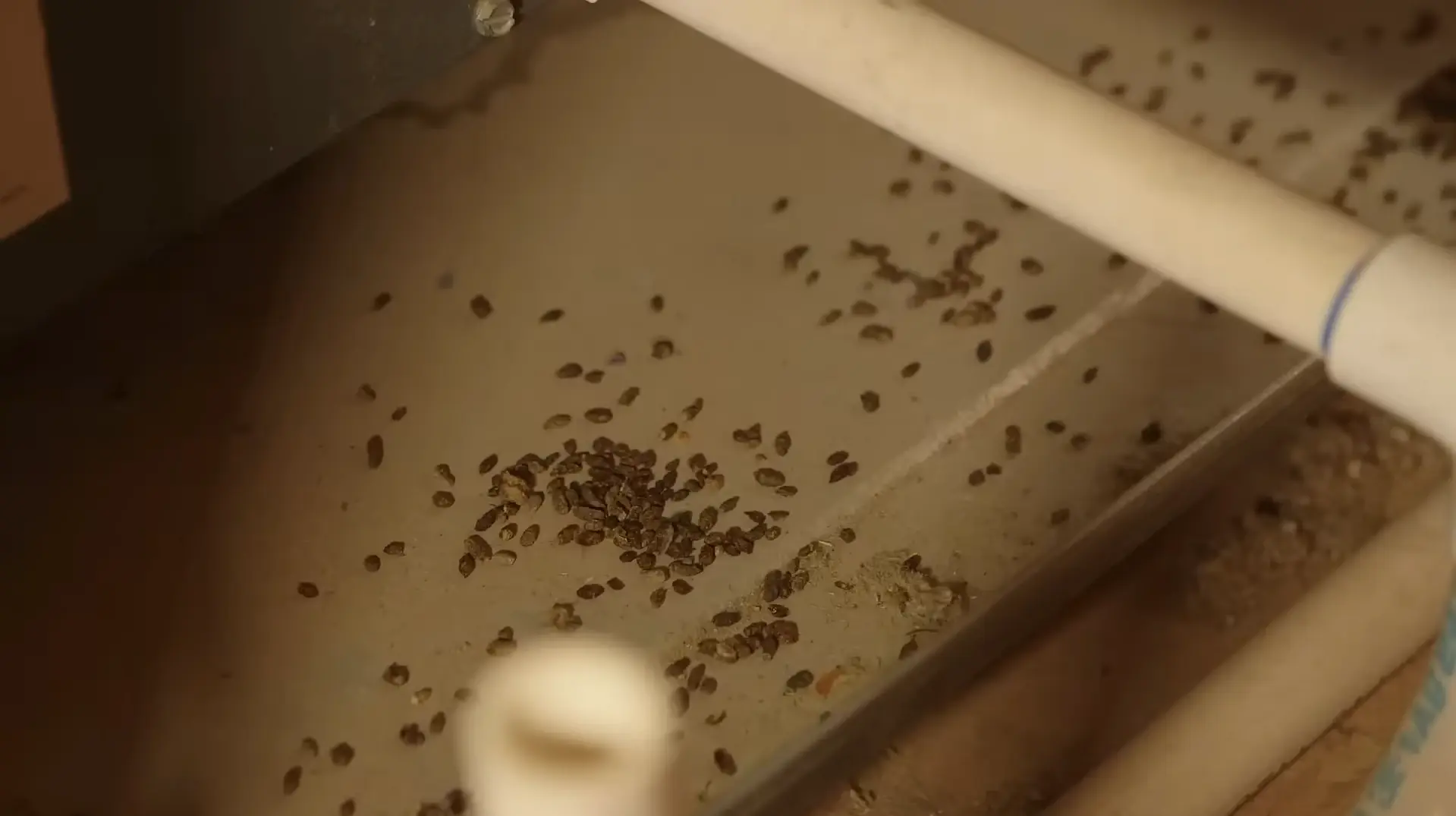
Do not sweep or vacuum droppings
Sweeping or vacuuming stirs dried droppings and urine into the air, where you can breathe them in. Wet them first with disinfectant and wipe them up with paper towels.
Know the symptoms
Know the symptoms and the time window after exposure, so you can tell your doctor about contact with rodents or droppings. Early care matters.
Fix the cause
Trapping and sealing end the exposure. Cleaning alone does not help if rodents can still get back in.
Santa Barbara rodent control
Diseases from rodents at a glance
This table covers the illnesses most tied to the four rodents we see in Santa Barbara. Open the species page for local detail.
| Illness | Main rodent | How people get it | First symptoms | How soon |
|---|---|---|---|---|
| Hantavirus | Deer mouse | Breathing dust from dried droppings, urine or saliva; rare bite | Fever, aches, tiredness, then cough and trouble breathing | Usually 1–3 weeks, up to 8 |
| LCMV | House mouse | Breathing dust or contact with urine, droppings, saliva or nests; bites | Flu-like, often mild; rarely brain or spinal cord swelling | Usually 1–2 weeks |
| Salmonella | House mouse, rats | Eating or touching food or surfaces contaminated by droppings | Watery diarrhea, stomach cramps, fever | 6 hours to 6 days |
| Flea-borne (murine) typhus | Roof rat and other rats, via fleas | Flea feces getting into a bite or scratch | Fever, headache, chills, aches, sometimes rash | 6–14 days after a flea bite |
| Leptospirosis | Norway rat and others | Urine in water or wet soil; cuts, eyes, mouth | Fever, headache, muscle aches, vomiting | Usually 5–14 days, up to 30 |
| Rat-bite fever | Rats | Bite or scratch; contact with urine or fluids; dead rodents | Fever, chills, joint pain, rash | Days to 2 weeks |
| Allergies and asthma | Mice and rats | Breathing allergens from urine, dander and droppings | Wheeze, cough, stuffy nose | Any time, with exposure |
Most of these are rare in Santa Barbara County. The county's last diagnosed hantavirus case was in August 2020. California's flea-borne typhus is concentrated in parts of Los Angeles and Orange counties, with occasional cases elsewhere.
Santa Barbara rodent control
How people actually get sick from rodents
There are five main routes. Knowing them tells you what to avoid.
Breathing dust
Dried droppings and urine turn to dust when swept, vacuumed or shaken. This is the main route for hantavirus and LCMV.
Swallowing germs
Droppings on food, dishes or counters can spread salmonella. Touching droppings and then your mouth does the same.
Bites and scratches
Rat-bite fever and some other infections come from a bite or scratch, and sometimes from contact with a dead rodent.
Fleas
Rat fleas can spread flea-borne typhus when their feces get into a bite or scratch.
Water and soil
Rat urine in puddles or wet soil can spread leptospirosis through cuts and the eyes, nose or mouth.
The most common high-risk moment is cleanup done the wrong way. That is why the rules below matter more than the fear.
Can mouse droppings in my kitchen make me sick?
They can, but it is not common. The main risk is salmonella from droppings on food or surfaces, and LCMV from dust. Throw away open food the mice touched, wash hard surfaces with disinfectant, and wash your hands. Do not sweep. See our House Mice page.
I cleaned droppings in my attic or garage. What should I watch for?
Watch for flu-like symptoms for up to 8 weeks. Fever, aches, tiredness, headache, vomiting or diarrhea are the early signs. Write down the date you were exposed. If you get symptoms, call your doctor and say you had rodent exposure. Trouble breathing is an emergency, so call 911.
Is it safe to stay home while rodents are being trapped?
Usually yes, with a few rules. Keep kids and pets away from traps and any bait, and stay out of attics and crawl spaces. Check traps daily and handle them with gloves.
Do droppings in the attic mean I must replace the insulation?
Not always. A few droppings can be cleaned. Heavy soiling, urine stains and nests usually mean removing the insulation, because it cannot be fully disinfected. We decide this during the inspection.
What to look for
Symptom watch: what to look for and when
Different illnesses show up on different clocks. Use this as a guide, not a diagnosis.
| When symptoms start | What it could be | What you may notice |
|---|---|---|
| Within hours to about a week | Salmonella | Watery diarrhea, cramps, fever. Usually lasts 4 to 7 days. |
| About 1 to 2 weeks | Flea-borne typhus, leptospirosis, LCMV, rat-bite fever | Fever, headache, chills, body aches, vomiting, sometimes a rash |
| 1 to 8 weeks | Hantavirus | Flu-like first. Cough and shortness of breath about 4 to 10 days later. |
Tell your doctor the exposure
Many of these illnesses start like the flu. A doctor who knows about rodent contact can test and treat sooner. Flea-borne typhus, leptospirosis and rat-bite fever are treated with antibiotics, and hantavirus needs hospital care.
Santa Barbara rodent control
When to call your doctor, and when to call 911
Call 911 for trouble breathing after any rodent exposure. Hantavirus can move from flu-like to breathing failure within days.
Call your doctor soon if you have:
- Fever higher than 102°F, or fever with aches after rodent exposure
- Diarrhea or vomiting lasting more than 2 days, bloody stools, or signs of dehydration
- Yellow skin or eyes, or a rash with fever
- A rodent bite or scratch that looks red, swollen or infected
- Any rodent exposure while you are pregnant
This page is not medical advice. Symptom and timing details come from the public health sources listed at the bottom of the page.
Where to get care in Santa Barbara County
For trouble breathing, chest pain or severe illness, call 911 or go to the nearest emergency room. Tell the staff right away: "I have had rodent exposure."
| Emergency room | Address | Phone |
|---|---|---|
| Santa Barbara Cottage Hospital | Entrance at Castillo St. and W. Junipero St., Santa Barbara, CA 93105 | 805-569-7210 |
| Goleta Valley Cottage Hospital | 351 S. Patterson Ave., Goleta, CA 93111 | 805-681-6473 |
| Santa Ynez Valley Cottage Hospital | 2050 Viborg Rd., Solvang, CA 93463 | 805-688-6431 |
For questions about disease in the county, contact the Santa Barbara County Public Health Department. For rodent and vector questions, the Mosquito and Vector Management District can be reached at (805) 969-5050.
We list these places for your convenience. They are not affiliated with us and do not endorse us.
Santa Barbara rodent control
Who should take extra care
Most people face a low risk, but a few groups should be more careful around rodents and droppings. These are the groups to know about.
Pregnant people
LCMV can pass to an unborn baby. If you have had contact with mice, droppings or nests, call your doctor. Let someone else do the cleanup.
Young children
They dehydrate quickly with salmonella, and they touch floors and then their mouths. Keep them out of the work area.
People with asthma or allergies
Mouse allergen is common in homes and is tied to worse asthma in children. A review of studies found professional pest management cut mouse allergen by at least 75%, compared with a 27% drop with parent-led efforts.
Anyone cleaning a closed-up shed, cabin, RV or garage
Closed-up spaces can hold dried droppings and dust. These are the higher-risk spots for hantavirus, so air them out first and use wet cleaning with gloves.
Cleanup
Safe cleanup rules that apply to every rodent
These basics are the same for rats and mice. For heavy mess, see our rodent cleanup service.
Air it out
Open doors and windows and leave for at least 30 minutes, so any dust in the air can clear before you start.
Gear up
Wear rubber or nitrile gloves and eye protection to keep droppings off your skin and out of your eyes.
Never sweep or vacuum
That puts dust in the air, which is the main way people breathe in germs from droppings.
Wet it down
Spray droppings, nests and nearby surfaces with a fresh bleach solution (the National Park Service uses 1 part bleach to 10 parts water) or an EPA-registered disinfectant. Let it sit at least 10 minutes. Never mix bleach with other cleaners.
Wipe and bag
Use paper towels, seal everything in a bag, then a second bag, and put it in the outdoor trash.
Wash up
Wash hands with soap and water. Wash bedding and clothes that touched droppings in hot water.
Call a pro
for droppings in ducts, walls or attics, nests, a strong smell, or any area larger than a boot print. The National Park Service says heavy infestations need stronger protective gear. See our Rodent Droppings Cleanup service.
How we work
How we lower the health risk for your family
Health risk drops when the rodents are gone and the mess is cleaned the right way.
We trap and seal
Snap traps remove the rodents, and metal and concrete close the gaps. See Rodent Exclusion and Sealing.
Our technicians avoid poison indoors
It takes days to work, and rodents can die in walls, where they cause smells and flies. Poison can also harm pets and wildlife.
Our team members clean with wet methods and protective gear
Wet cleaning keeps dust down, and gloves, eye protection and sealed bags protect the people doing the work. For heavier mess, see our rodent cleanup service.
Our technicians check for fleas
if rats were active, and we suggest flea control for pets, since pet flea control is part of CDPH's typhus prevention advice.
We re-check
We return to confirm the activity has stopped, looking at the traps and the sealed spots again.
Health and safety
Everyday habits that lower the risk
A few small habits make a big difference. These are the ones that matter most.
- Store food and pet food in sealed containers, and keep trash lids tight.
- Keep firewood, brush and debris away from walls.
- Seal gaps larger than ¼ inch with metal or concrete.
- Treat pets with flea control and keep cats indoors, if you can.
- Wear gloves when you handle traps, and dispose of dead rodents in double bags.
- Do not feed or handle wild rodents.
What we offer
What we offer
Every job starts with a free consultation call to plan the work. You get a written quote after we see your home, before any work starts.
Rodent trapping program
Traps set where the activity is, with check visits and safe removal of what is caught.
Sealing and exclusion
Metal and concrete repairs at every entry point, so new rodents cannot get back in.
Droppings and nest cleanup
Wet clean-up, sanitizing and insulation repair where it is needed.
Dead rodent removal
Finding and removing the source of smells in walls, ceilings or crawl spaces.
Monitoring visit
A re-check visit to confirm the rodents are gone and the repairs are holding.
See details on our Rodent Control Services page.
Where we work
Areas we cover
We serve Downtown Santa Barbara, the Mesa, the Riviera, Montecito, Hope Ranch, Goleta, Isla Vista, Carpinteria and Summerland. See all neighborhoods on our Service Areas page.

What diseases can rodents carry?
Rats and mice can carry hantavirus, LCMV, salmonella, leptospirosis, flea-borne typhus and rat-bite fever. They also cause allergies and asthma. Each rodent is tied to different germs, and most are rare in Santa Barbara. See the table above.
Can I get sick just from being near rodent droppings?
Usually you need to breathe the dust, swallow germs or touch your face after contact. Being in the same room is not the same as contact. Disturbing dry droppings is what raises the risk, so wet them first.
Is hantavirus common in Santa Barbara?
No, it is rare. The virus has been found in the county, and the last diagnosed case was in August 2020. Deer mice carry it, and it does not spread from person to person. See our Deer Mice and Hantavirus page.
Is typhus a risk in Santa Barbara?
It is uncommon here. CDPH says flea-borne typhus is always present in parts of Los Angeles and Orange counties, with occasional cases elsewhere. A 2013–2019 state report counted 96.8% of California cases in Los Angeles County. We have not found a published Santa Barbara County count, so we do not say how common it is here.
What about plague?
Plague is rare in house-dwelling rats and mice. UC IPM says plague is very rarely found in house-dwelling rodents like rats and mice. In California it occurs in wild ground squirrels, chipmunks and sometimes woodrats. Keep pets free of fleas and avoid dead wildlife.
Do I need a mask to clean up droppings?
Gloves and wet-cleaning matter most for a small job. Ordinary dust or surgical masks do not protect you in heavy contamination. If the area is dusty, closed-up or heavily soiled, hire a pro with the right gear.
Can rodents make asthma or allergies worse?
Yes. Mouse allergen is found in many U.S. homes and is linked to worse asthma, especially in children. Removing the rodents and cleaning the allergen helps. Talk to your doctor about asthma plans.
Are rodents dangerous to my pets?
They can be. Pets can get fleas, and some germs, such as leptospirosis and salmonella, can pass to pets. Keep pet food sealed, and keep pets away from traps and bait. Call your vet if your pet seems sick after rodent contact.
Who can I call with health questions?
Your doctor first, and the county vector district for local rodent information at (805) 969-5050. For trouble breathing, call 911. The district also offers free rat and mouse property inspections.
Plan ahead
Rodent Seasons in Santa Barbara
Our mild climate means rodents are active all year, but what they do changes with the weather. Knowing the season helps you spot the first signs early.
Spring
Squirrels nest in attics and roofs, and young may be present. We check for babies before any sealing.
Summer
Roof rats feed on avocados, citrus and figs, and travel along palms, ivy and wires to reach roofs.
Fall
Nights cool and the first rains arrive. Mice look for warm, dry places, and many move indoors.
Winter
Wet weather can push rats under houses and into attics. Crawl spaces and roof edges are worth checking.
Found droppings?
Photograph them first and do not sweep
Sweeping can stir dust into the air. A photo lets us tell you what you have and what to do next.
- 1The droppings
A close-up, with a coin for size.
- 2The surrounding area
A wider photo showing where they were.
- 3Food nearby
Open food, pet bowls or dishes close to it.
- 4Who lives there
Young children, pets or people with breathing problems.
- 5When you noticed
How long ago, and whether there is more now.
Ready when you are
Ready to fix the cause?
The safest home is one without rodents. Call us for a free consultation. We will find the entry points, remove the rodents, clean up safely and seal your home.
- Call us(805) 429-3801
- Emailrodentshieldsantabarbara@gmail.com
- Office716 N Milpas St, Santa Barbara, CA 93103
- HoursMonday to Saturday, 8:00 AM to 6:00 PM

Sources
- CDPH: Flea-borne Typhus Fact Sheet
- CDPH: Flea-borne Typhus Epidemiologic Summary 2013–2019
- CDC: Leptospirosis fact sheet
- CDC: Salmonella symptoms
- MedlinePlus: Rat-bite fever
- National Park Service: Hantavirus Pulmonary Syndrome
- Mosquito and Vector Management District of Santa Barbara County: Hantavirus
- Mother To Baby: LCMV
- UC IPM: House Mouse
- Matsui: Management of Rodent Exposure and Allergy in the Pediatric Population (2013)
- Healthline: Chances of getting sick from mouse droppings